
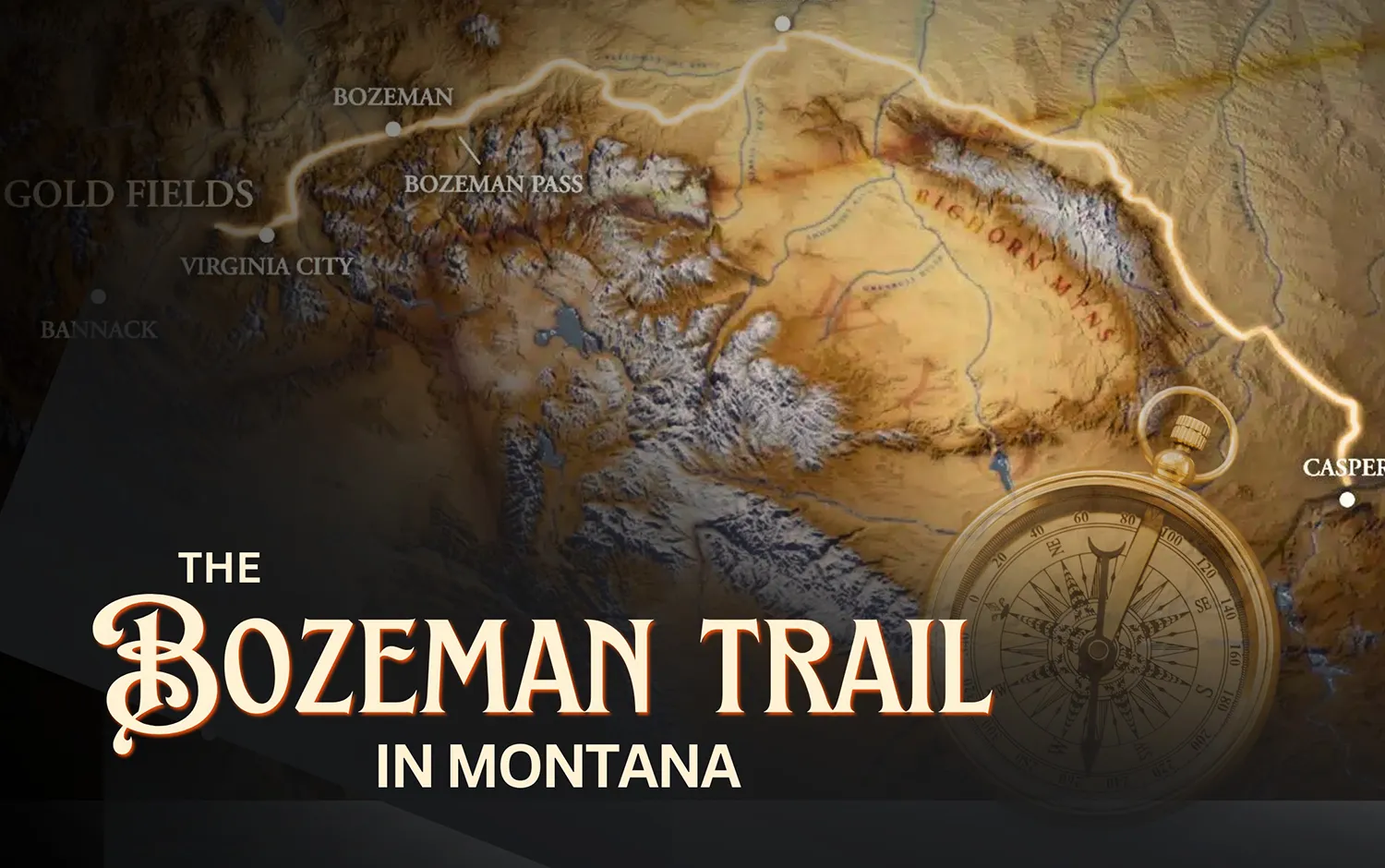
The Bozeman Trail in Montana
Listen to Audio
The Bozeman Trail was pioneered in 1863 by John Bozeman and John Jacobs as a shortcut to the Montana goldfields. Spanning approximately 535 miles, the route connected the Oregon Trail near Casper, Wyoming, with the mining camps around Virginia City, Montana.
The trail crossed Native American hunting grounds and traditional homelands, setting the stage for a complex and often violent chapter in the history of the Northern Plains. Increasing use of the route by emigrants and the establishment of military forts led to escalating conflict that culminated in Red Cloud’s War, including the Fetterman Fight (1866) and the Wagon Box and Hayfield fights (1867).
Historian Ralph Saunders, a long-time board member of Our Montana, has spent years researching, mapping, and documenting the Bozeman Trail’s route through Montana. His field investigations and historical research have helped identify the trail with remarkable accuracy, including visible remnants of wagon tracks still etched into the landscape.
Today, portions of the historic route can still be traced across Montana’s landscapes, with visible wagon tracks, historic sites, and interpretive locations that help tell the story of the trail and its lasting impact on the region.
Saunders’ research is presented in The Bozeman Trail in Montana: A Trail Description and Touring Guide, a detailed traveler’s guide that blends historic accounts, emigrant diaries, and carefully researched maps to trace the trail’s course across Montana. The guidebook offers an in-depth companion for those wishing to explore the trail and its history.
The Bozeman Trail in Montana website, developed by Our Montana, provides historical background, selected resources, and an introduction to the trail for those interested in learning more about this important corridor of western history.
Media
- Website The Bozeman Trail in Montana
- Related Resource The Bozeman Trail in Montana
Nearby Sites (within 5 miles)